

 LinkedIn
The fastest way to waste a week on AI visibility is to treat it like a Google Ads account: hunt for a rank, buy a gap report, add schema and wait. I understand the impulse. I spent the better part of a decade managing ads, and that brain is hard to switch off.
Answer engines do not run an auction or line up ten blue links. They draft answers from sources they can load and use, and the same question can produce different names tomorrow. That difference breaks seven instincts beginners bring from paid search.
“Which tool tells me what to fix?”
The questions usually arrive in one of three forms: What platform shows the content gaps keeping me out of AI answers? Which tool fixes the technical stuff hurting my visibility? What software gets my landing pages into AI Overviews?
They are reasonable questions if you come from paid search, where the right report can point straight to the next account change. But they share the most common and costly assumption I see: that AI visibility has a position to win, a gap report to buy, a snippet of code to add and a keyword list to upload. That sends you shopping before you know whether an answer engine can read your pages or has a reason to use them.
Belief 1: “There’s a position I can rank for”
Paid search trained you to think in positions. Position 2.1. Impression share 78%. Rank lost to budget. Naturally, you ask where you rank in ChatGPT and expect a number you can improve.
There is no position to hold. The same prompt asked ten times can name you six times, link you twice and skip you the other four. You have odds, not a spot. That is why LLM tracking runs the same prompts repeatedly and reports how often you appear.
Chasing a single rank costs you a useful measurement. Track mention rate and citation rate separately: being named in the answer is not the same as being linked as a source. A citation can carry authority and clicks; a mention may do neither. In one analysis of 20.5 million citations, 90.4% pointed to sources naming no tracked brand, while only 4.5% were the brand’s own page. Those are different contests, even when they appear in the same answer.
Pick ten prompts a buyer would actually ask. Run each one repeatedly and log how often you are named and how often your page is cited. Start with the rates, not a screenshot of one answer.
Belief 2: “A tool will show me the content gaps, and that’s the hard part”
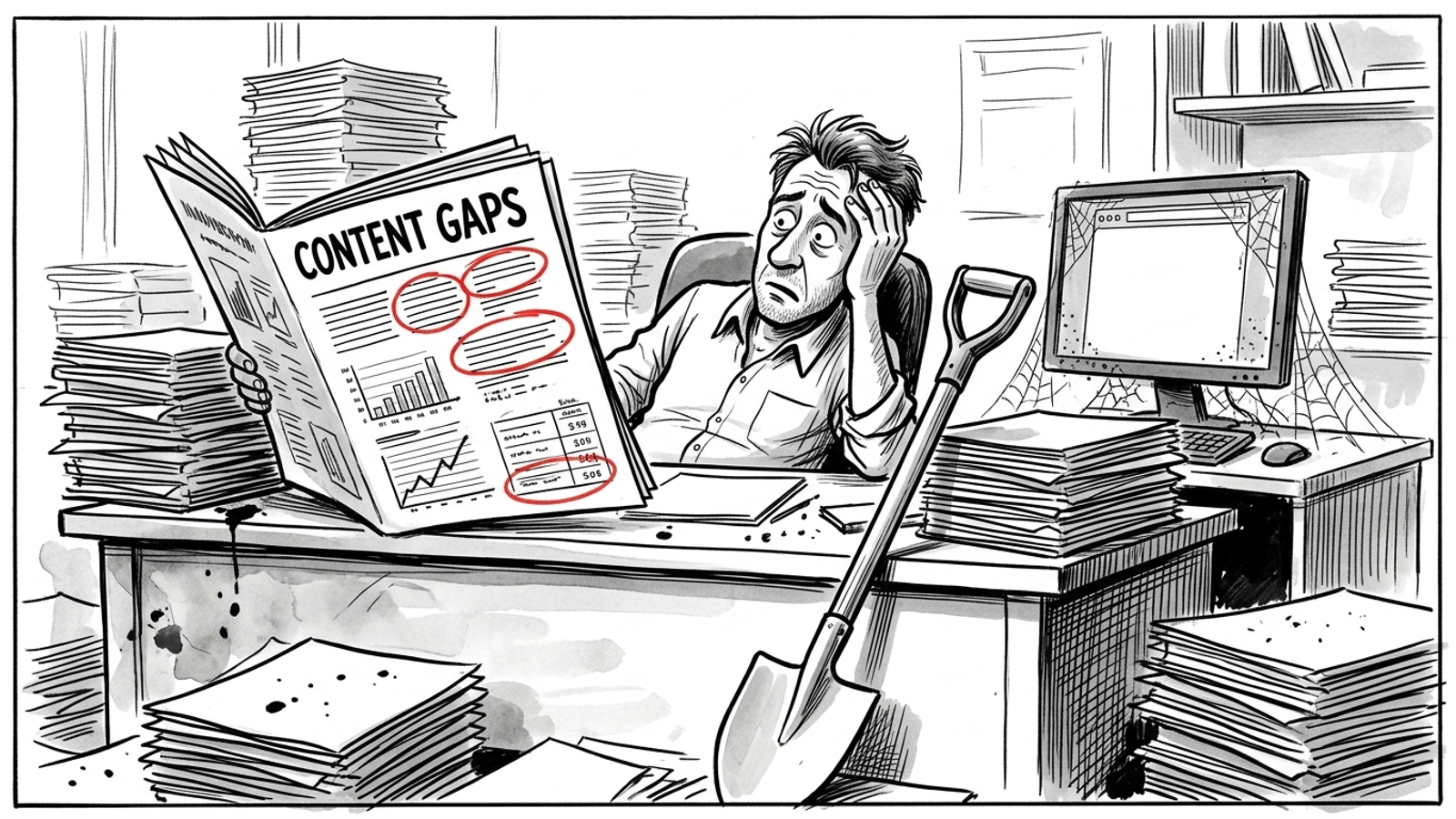
In Google Ads, diagnosis can be almost the whole fix. The search-terms report shows wasted spend; you add a negative keyword; CPA drops. So a content-gap report feels like it should work the same way: find the missing topic, fill the blank, get cited.
Seeing the gap is cheap. Closing it is the work. A useful AI visibility workflow warns against dumping hundreds of vaguely relevant prompts into a tracker. A healthy overall score can hide the fact that you are absent from the comparison question your buyers ask before they decide.
Group the prompts you care about by the business question behind them: comparisons, use cases, facts and prices. Then connect each question to a page that answers it. If that page circles the topic for six paragraphs before stating the answer, the report cannot rescue it. Rewrite the page in plain language a model can quote. If no page answers the question, build one.
A tool can tell you where to look. It cannot make a thin page worth citing.
Belief 3: “Technical SEO for AI means adding schema”
I used to think schema was free money: add the markup, get the rich result. That logic does not carry neatly into AI answers. Google states that no special schema is needed for AI Overviews or AI Mode. In one test of 1,885 pages that added JSON-LD, Overviews dropped 4.6%, while AI Mode rose 2.4% and ChatGPT rose 2.2%. Only the negative move counted as significant. Schema is not the switch those numbers promise.
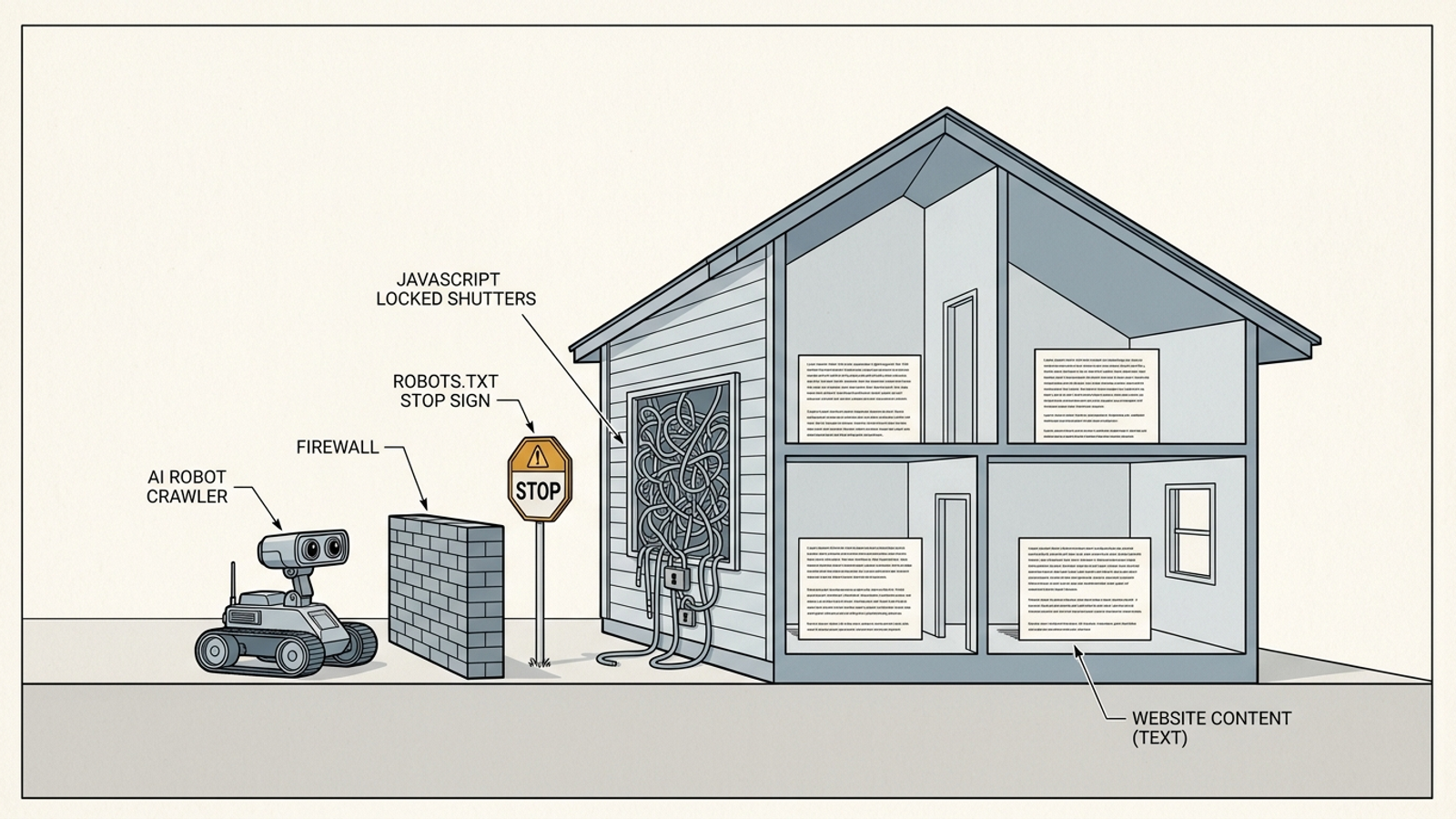
The more basic problem can sit earlier in the chain. In a December 2024 test of GPTBot, OAI-SearchBot, ChatGPT-User, ClaudeBot and PerplexityBot, none rendered JavaScript; they fetched scripts without executing them. If the paragraph that answers a buyer’s question appears only after rendering, those crawlers see an empty shell where your answer should be.
So ask a duller, better question first: Can the bot load and read the page? Check robots rules, firewall blocks, login walls and client-side rendering. View source without JavaScript and check server logs for the bot names. Fix access before polishing markup. A beautifully labelled empty shell is still empty.
Belief 4: “My keyword list is my prompt list”
This is pure search-ads brain, and it is hard to shake. You have 200 exact-match keywords, you mine queries, you feel covered. Then you paste the list into an AI tracker and expect it to represent what buyers ask.
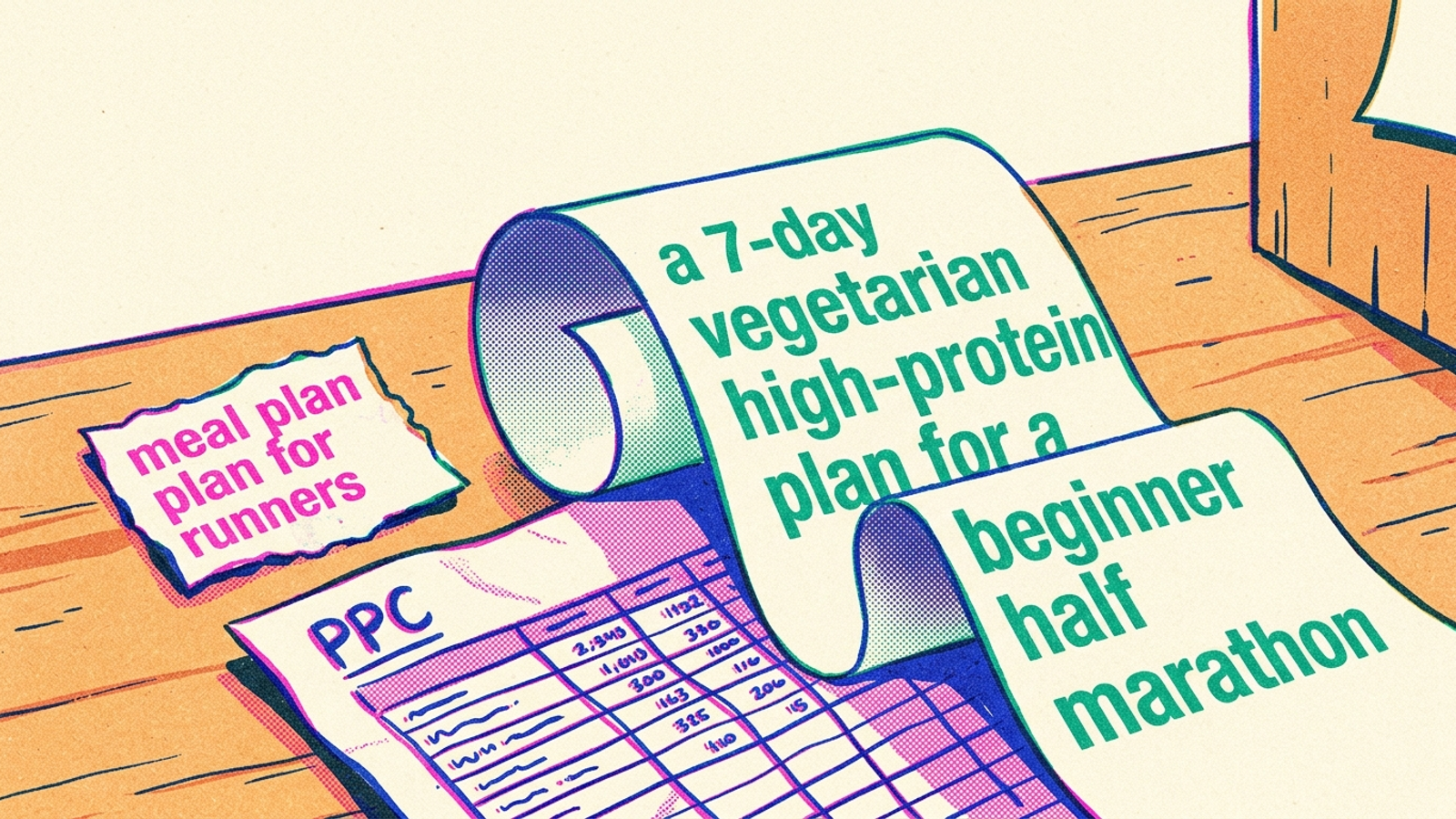
But keywords tend to be short and fragmented, while prompts are longer, conversational and complete. A keyword such as meal plan for runners leaves the engine to guess what kind of runner, diet and plan the person wants. A prompt might ask for a 7-day vegetarian high-protein plan for a beginner half-marathon. The constraints are part of the question, not optional detail.
That changes what a useful page must answer. A page can contain the keyword and still fail the fuller ask. Prompt-style discovery also matters before a click: AI Overviews appear on 13.14% of queries in the cited analysis.
Take your ten most valuable keywords and rewrite each as something a buyer would say aloud. Include the comparison or constraint that would change the answer. Use those questions to test your pages; do not rename the keyword export and call it a prompt strategy.
Belief 5: “If I’m mentioned once, I’m visible”
A screenshot feels persuasive. Your ad appeared in the preview tool, so you know it served. You ask ChatGPT one question, see your name and a link, and send the image to the team.
One answer is a sample, not a score. Models can vary even when the prompt does not. In one controlled test, researchers ran the same prompt 1,000 times at temperature zero and got 80 different completions. Consumer apps can add live retrieval and personalization. The answer you saw on Tuesday is not a position you own on Wednesday.
For a prompt that matters, run it daily for at least a week before claiming a trend; asking twice can surface different brands and sources. Record whether you were named and whether your page was cited on each run. If you appear in three of ten runs for your best comparison prompt, you are not ranked third. You appeared 30% of the time in that set of runs.
That baseline gives you something to work against. Change the page or fix access, then keep measuring the same question. Refreshing a rank tracker is not a fix.
Belief 6: “Buying an AI Overview ad gets me the citation”
In paid search, money can buy the chance to appear beside a query. It is tempting to assume an ad in an AI answer also pulls your link into the answer’s sources.
The ad and the citation come from separate decisions. The ad auction chooses the advertiser card; the answer’s retrieval and generation determine which sources it quotes. One analysis of commercial AI Mode queries found a text ad on 29% of them, but the advertiser domain was cited only 11% of the time and the exact URL less than 2%. Paying for the space beside an answer does not buy a place inside it.
Think of the page as three contests:
- Ads: pay for the opportunity to appear beside the answer.
- Organic listings: compete for a place in search results.
- Cited sources: give the answer a page it can load and quote.
Budget for the first if you need leads this month. Work on the third with pages that answer buyer questions directly. If your ad appears and a competitor gets cited beneath it, the ad may have done its job. Your content has a different job left to do.
Belief 7: “Automated reporting means automated improvement”
This one is hardest to argue against because the report looks like work. Automated reporting saved real time in paid search: a script sent CPA by campaign on Monday, and someone used it to decide what to pause. It is easy to ask for the AI equivalent, a weekly visibility score that arrives in your inbox, and assume the fixes will follow.
They will not. A report that changes nothing is a dashboard, not a strategy. If nobody rewrites the thin service page, unblocks the bot or adds the comparison paragraph buyers keep asking for, next Monday brings the same problem with a new date on it.
The cost is a subscription plus stalled content. Three months of tracking an unchanged page does not tell you whether improving that page would work. It tells you the page remained unchanged. The useful unit of work is smaller and less glamorous: one access fix, one rewritten answer, one proof block the page can offer as a source.
If you buy a tool, make it tie each prompt result to a named page someone will change. That is the check in An Open Letter to the Owner About to Buy an AI Visibility Dashboard. If the report cannot name the page or the next action, skip it until you have pages worth tracking.
“Fine. What do I do in week one?”
If I were starting from zero with a search-ads brain, I would ban myself from buying anything for seven days. Start with the questions, not a platform. Mine the question behind each query, then find the page that ought to answer it. Check whether a bot can read that page. Rewrite one answer so it appears in plain text near the top. If the page already ranks around position 8, fix that page instead of writing a new one.
Here is the whole first-week loop:
- Write ten buyer prompts and run them repeatedly. Use five comparisons, three use-case questions and two price or fact questions. Across the week, log named separately from cited.
- Check access on the pages those prompts should reach. View source with JavaScript off, read
robots.txtand search server logs for GPTBot and the other bots. Unblock a page before polishing it. - Rewrite one page. Put a direct answer in the first 100 words. Add a comparison table or steps a model can lift, plus proof it can quote. Then keep testing the same prompts.
That is also the loop groas runs for clients around the clock, with a human strategist owning the outcome. I would rather hand over the repetition than run it by hand every week. But I would still want to know which pages changed and what happened to the questions that matter.
The belief I am still not sure about is the one I most want to be true: “A citation will pay the way a click paid.” In paid search, I could work back from clicks to CPA. In AI answers, I can raise mention rate from 30% to 60% and still not tell you what that did to pipeline. Say you are spending $20k a month and AI answers half your buyers before they click. Being named feels like winning until you ask which names got the call.
I track it anyway, and I fix access and answers anyway, because invisibility is clearly worse. But I have stopped pretending a high visibility score is revenue. That part I am still testing.